INDONESIA’S FMCG market is becoming more competitive, with fewer brands managing to grow even though shopping habits remain broadly stable, according to the latest Brand Footprint 2026 report from Worldpanel by Numerator.
The annual report ranks Indonesia’s most chosen FMCG brands using Consumer Reach Points (CRPs), a metric that measures how often consumers choose a brand.
The measure refers to how many buyers have purchased and interacted with a brand, showing a clear and strong consumer preference and brand strength.
ADVERTISEMENT

SCROLL TO RESUME CONTENT
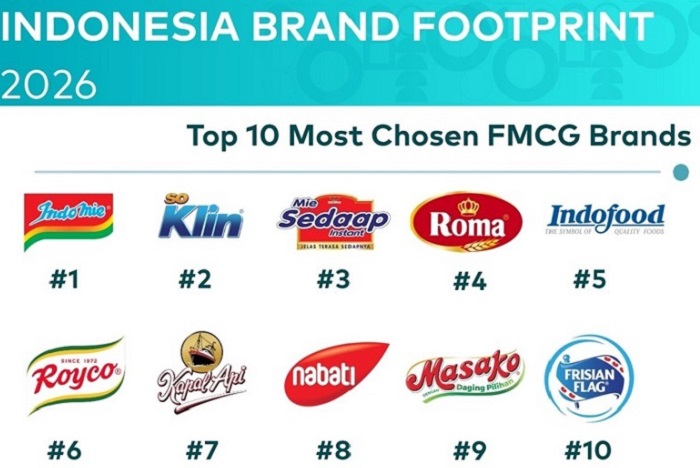
This year’s Top 10 Most Chosen FMCG Brand is led by Indomie, followed by So Klin, Mie Sedaap, Roma, Indofood, Royco, Kapal Api, NABATI, Masako and Frisian Flag.
The top list doesn’t change much from previous years, where Indofood swap ranking with Royco and Frisian Flag back to the top 10, replacing Daia from last year.
Although Indonesian households continue to buy around 95 grocery brands each year and make an average of 293 shopping trips, competition has intensified.
Venu Madhav, Managing Director at Worldpanel Indonesia explained “The number of brands tracked increased from 436 to 451, meaning brands are now competing harder than ever for shoppers.
As a result, only 44% of brands grew in 2025, compared with 62% the previous year. He added, “Consumers are still shopping regularly, but brands can no longer rely on market growth alone. Winning new shoppers has become more important than ever,” said Venu.
Winning shoppers remains the biggest opportunity
The report shows that reaching more households remains the biggest driver of sustainable growth.
Around 80% of growing brands increased their presence in households, either on its own or alongside higher purchase frequency, showing that attracting new buyers remains the foundation of long-term success.
Also Read:
For larger brands, encouraging shoppers to buy more often becomes increasingly important once they have reached scale. However, continued growth still depends on bringing new consumers to the brand.
The report also shows that smaller brands continue to gain momentum. Small brands now represent 41% of all brands tracked, up from 39% last year, and more than half recorded growth.

This shows that consumers remain open to trying brands that offer innovation, value and products that fit their everyday needs.
The brands showing how to grow
Several Indonesian brands demonstrate how sustainable growth can be achieved by combining innovation, strong distribution and relevance to consumers.
Desaku continued its three-year growth streak by making everyday cooking easier for Indonesian households.
Its broad range of herbs, spices and seasonings, combined with affordable sachet formats and a strong presence in traditional retail, helped the brand attract more than six million new shoppers, while also increasing loyalty among existing buyers.
Baby Happy continued to strengthen its position by expanding its portfolio with sachet pack and promote it with buy more save more.

By combining innovation with affordable pricing and wider distribution across traditional retail, online and specialist stores, the brand attracted 1.7 million new shoppers over the past year.
Corina Fajriyani, Marketing Lead at Worldpanel Indonesia concluded: “Brand Footprint continues to show that sustainable growth comes from understanding shoppers and staying relevant to their everyday lives. The brands performing best are those that continue attracting new buyers while giving consumers more reasons to choose them.”****